A practical guide to checking Melbourne venue locations, opening hours and gaming details, from the airport area to the suburbs.
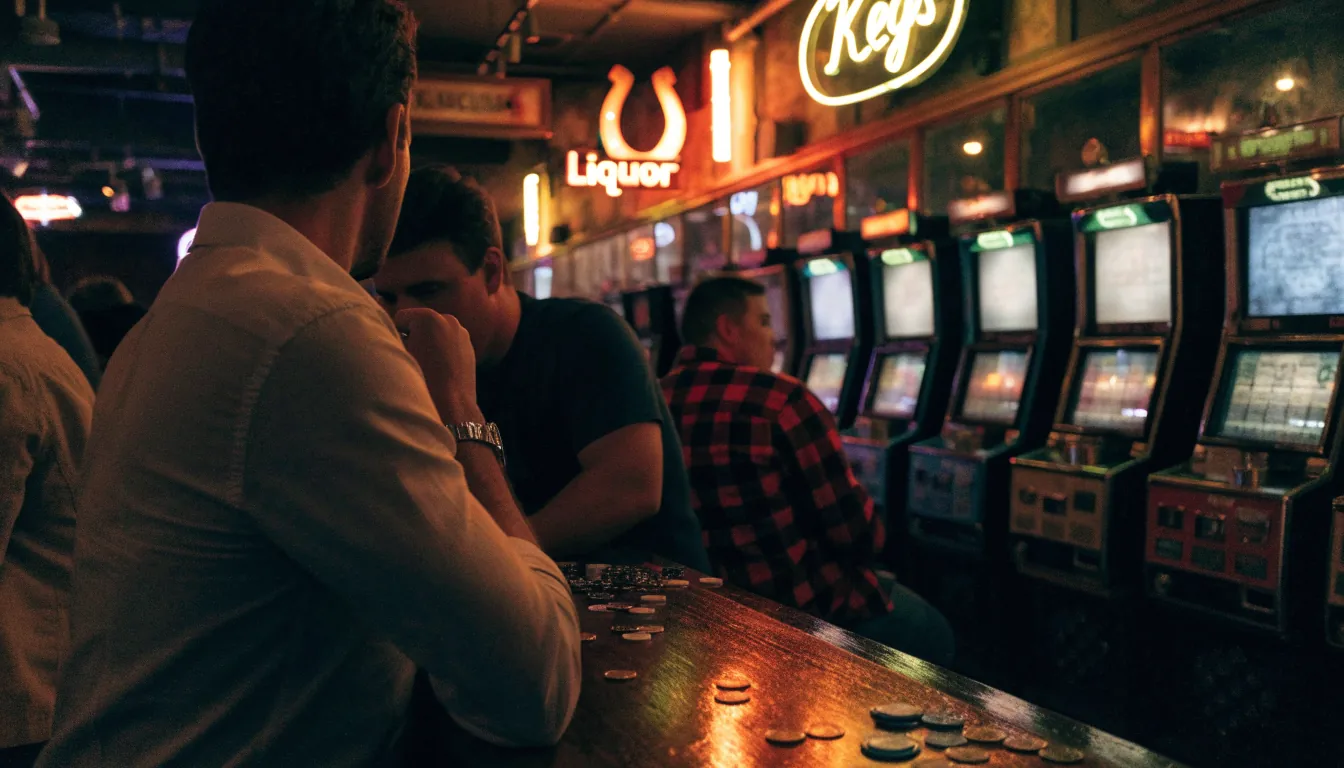
A search for pokies near Melbourne Airport can mean two different things: machines inside the airport precinct, or a venue somewhere in the wider area around it. Those are not the same trip. I would pin the exact destination before setting off rather than treating “near the airport” as a useful address. A result can sit outside the terminal area, and the word “near” does not tell you how practical the journey will be.
I’ve learned not to trust a map preview on its own. Open the venue’s own listing, compare the street address with the map, and check that the result refers to a physical venue rather than a directory page, an old mention or an unrelated business. If you are travelling from the terminal, consider the whole route, not just the distance shown in a headline. The last leg can matter more than the broad area label.
That is especially worth doing if you have a flight to catch or have just arrived. A venue that looks close on a screen may still involve a separate journey, and a map pin does not confirm that the place has pokies. I would want the venue itself to identify its gaming facilities before building a plan around them. “Close by” is not confirmation.
Melbourne Central is an inner-city reference point, not another name for Melbourne Airport. If you are looking around Melbourne Central, use that landmark as the centre of the map and inspect the address of each result. A listing that mentions central Melbourne may be elsewhere in the city; a broad label alone does not establish how far it is from the landmark or whether it suits your route.
The same goes for searches around the CBD. It is easy to blur a destination in the central area with one near the airport, especially when a result page groups places under a general Melbourne heading. I’d keep those plans separate: choose the actual starting point, set the map around it, then check each candidate’s address rather than relying on a category label.
Port Melbourne needs the same care. It is a distinct area to look at, not a dependable shortcut for finding a venue at the airport or in the city centre. When a result says it serves Melbourne broadly, that does not tell you where its doors are. Check the location itself.
For a “near me” search, location settings can change what appears. Before relying on the first result, check that your map is centred on where you actually are—or on the place you will start from. If you are still at home, results may be arranged around home rather than the airport, Melbourne Central or Port Melbourne. That sounds obvious. It catches people out.
Then look at the full address and the route, not only the name of the area. If the listing has no clear address, or the venue’s own information does not match the map, pause and confirm directly. A broad search result is a lead, not proof. I would rather spend a minute checking than arrive somewhere that was never the place I meant to find.
It also helps to decide what “near” means for your own trip. Are you already at the terminal, meeting someone in the city, or heading through Port Melbourne? Those starting points lead to different routes. There is no single useful radius that fits every traveller, and a map result cannot know whether you are walking, driving or connecting from another stop. Set the point that matters to you first.
Search wording can muddy things further. Results for “Melbourne” may cover a wide area, while results tied to a landmark can still include surrounding districts. Look for a specific venue address and a clear statement from the venue about its facilities; don’t infer either from a city-wide heading. If the details are vague or inconsistent, leave that result out of your plan.
I would treat the airport, Melbourne Central and Port Melbourne as separate starting points, not as interchangeable labels. Pick the one that matches your actual route, confirm the address, and make sure the venue itself says it has pokies. That keeps a vague map result from turning into a wasted detour. No guesswork needed.
A map pin saying “open” is a starting point, not a reason to head out the door. I’ve learned to check the venue’s own current information before making the trip. A listing can be out of date, and a venue being open does not necessarily tell you whether its gaming area is operating or accessible.
Start with the venue’s official website. Look for its current opening information and any notice about changes to service. If the details are unclear, call and ask directly. That small step can spare you a wasted trip. A search result or third-party listing may help you find contact details, but I wouldn’t treat it as the final word on today’s availability.
Be precise about what you’re asking. “Are you open?” might get a yes even if the part you planned to visit isn’t available. Ask whether the venue is open at the time you intend to arrive and whether the pokies area is open to patrons then. If you’re travelling for a particular reason, ask whether anything could affect access when you get there. No need to make it complicated. Just confirm the thing you actually want to do.
Opening information is useful only if it matches your plans. Check the day and the expected arrival time, not just the venue’s general hours. If you’re setting off early or heading out later, confirm that specific window with the venue. Don’t assume that hours shown for one day apply to another, or that a venue’s general opening time is the same as the gaming area’s.
For an early visit, ask whether the pokies area is operating when you expect to arrive. The same goes if you’re planning to go later: confirm that access will still be available at that point. It’s a straightforward check, but it can be easy to skip when a listing appears certain. “Open” is a broad label. Your plans are more specific.
If you’re already on the way and can’t get a clear answer, pause before committing to a longer detour. Check the venue’s own updates or try calling again closer to your arrival. A listing that was accurate when it was published may not reflect a change made since. I’d rather spend a moment confirming than turn a hopeful guess into a journey.
Pay attention to what an opening time refers to. It may describe the whole venue, a bar or dining service, or another part of the premises. Unless the information clearly covers pokies, don’t assume it confirms that the gaming area is open too. If there’s any doubt, ask.
Also check whether the information is current. Look for the date of a notice or update where one is shown. If a page gives general hours but has no clear indication that they apply to your visit, treat them as a prompt to confirm, not a promise. A phone call can be more useful than trying to infer details from a short listing.
Keep your question simple and neutral: is the venue open when you plan to arrive, and will the pokies area be accessible then? You don’t need to rely on guesses about what a label means. If the answer is unclear, ask again or choose not to make the trip until you know. Small check. Less hassle.
Confirming Opening Hours
Check the official website
Look for current opening information and any notices about changes to service.
Call the venue directly
Ask specifically if the venue is open at your intended arrival time and if the pokies area is accessible.
Verify the date
Ensure the listed hours apply to the specific day of your visit, especially for late-night trading.
Knowing that a venue is open answers only the availability question. It doesn’t tell you whether the visit fits your plans, what the atmosphere will be like, or what the pokies will return. Those are separate things. An opening status isn’t a recommendation, and it shouldn’t be read as one.
I’d also avoid making a decision based on a payout percentage shown beside opening information. It’s a different claim and needs its own careful check; the time a venue opens cannot confirm anything about a game’s return. Keep the questions separate. First confirm that the place and the area you intend to visit are available. Then consider any other information on its own terms.
When you check, use the venue’s current information and confirm directly if anything is ambiguous. That won’t guarantee your plans go perfectly, but it gives you a better basis than relying on a bare “open now” label. Make the call before you leave.
Choosing pokies online from Melbourne means weighing what matters to you before you play. Use this list as a reference point, and check the details that affect your own choice.
JustCasino
You can note that JustCasino lists a Curacao Gaming Control Board licence.
Kingmaker
You can consider Kingmaker if its payment options fit your plans: crypto payouts are listed at about 90 minutes, while fiat payouts take 1–5 days. The minimum deposit is A$30.
SpinsUp
You can note that SpinsUp lists a Curacao Gaming Control Board licence, OGL/2023/174/0082, under Dama N.V.
DragonSlots Casino
You can note that DragonSlots Casino lists a Curacao Gaming Authority licence under Jumpman Gaming Ltd.
House of Pokies
You can consider House of Pokies if PayID payout timing is relevant to you: payouts are listed at 1–24 hours. Its minimum deposit is A$30, or A$10 with PayID; the source describes its licence as international but does not name the jurisdiction.
Bizzo Casino
You can note that Bizzo Casino lists a Curacao Gaming Control Board licence under TechSolutions Group N.V.
LevelUp Casino
You can note that LevelUp Casino lists a Curacao eGaming licence, OGL/2023/174/0082, under Dama N.V. Its minimum deposit is A$15.
Golden Pokies
You can note that Golden Pokies lists Curacao as its licensing jurisdiction.
SkyCrown
You can consider SkyCrown if crypto payout timing matters to you: it is listed at about 10–15 minutes, while fiat payouts take 1–5 days. The minimum deposit is A$30, and the listed regulator is the Tobique Gaming Commission.
Ricky Casino
You can consider Ricky Casino if you want to check its listed payment terms: crypto payouts are under 1 hour, while PayID payouts take 1–3 business days. The minimum deposit is A$20, or A$30 to qualify for the bonus.
“Best paying” sounds like a clean comparison: find the pokie with the biggest return, sit down, and expect better results. I used to read claims that way. The trouble is that a return figure describes a game setting, not what one person will take home from a particular session.
A specialist review reports that some game providers let casinos choose between different return-to-player settings for the same pokie. So seeing the same title in two places does not, by itself, show that it is running at the same setting. Nor does a high-looking figure tell you what will happen on your next spin. You need to know which setting is in use, and a headline that leaves that unclear is a thin basis for comparison.
RTP is a long-run measure. It describes a theoretical return across a very large number of plays, not a promise that a player will receive that share back during an afternoon, an evening, or any other short stretch. A game can be set to return a certain proportion over time while individual players have very different outcomes. That gap between the statistic and the session is where the “best paying” pitch can start to sound more certain than it is.
A pokie uses a Random Number Generator to produce outcomes, and each spin is separate from the one before it. A run of losses does not make a win due, and a win does not make another win more likely on the next turn. I have seen how easy it is to start treating a pattern as a message. It isn’t one.
That independence also means that a return percentage cannot be used like a forecast. It does not say when a feature will appear, how long a balance will last, or whether a player will finish ahead. The figure may help compare disclosed game settings, but it cannot turn random outcomes into a reliable plan. That distinction matters more than a “hot” or “generous” label.
A pokie uses a Random Number Generator to produce outcomes, meaning each spin is a separate event and independent from the one before it.
If you are comparing pokies associated with a Melbourne casino or another local venue, first separate the game from the place where it is played. A familiar title may be available under a different return setting elsewhere, while two versions that look alike may not offer the same configuration. Without clear information about the setting, ranking one as the best paying is guesswork dressed up as precision.
When a payout claim gives no context, I would not treat it as evidence that a particular pokie will suit you or produce a better result. Ask what the number refers to, whether it applies to the exact version being discussed, and whether the information identifies the setting. If those details are absent, the comparison has a hole in it.
The same caution applies to claims about Melbourne pokies, whether you are thinking of a city venue or looking at online material. A game’s name and a return figure do not tell you what an individual session will deliver. And where a figure cannot be tied to the exact game configuration, it cannot support a meaningful side-by-side judgment.
I’m not saying return information is useless. It can tell you something about a game’s theoretical design when the setting is known. It just cannot tell you what your own next spin will do. That’s the bit the sales language tends to blur.
So when someone calls a pokie the “best paying,” I now look for the setting behind the claim—and keep the random nature of every spin in view. A label isn’t a forecast.
When you’re comparing Melbourne pokies venues, it’s easy to let the room, the service or a “best venue” label do the convincing. I’ve learned to look past that first impression. A more useful check is whether the venue makes its responsible-gambling safeguards clear and gives you practical ways to pause or stop.
Look for options to set deposit limits, loss limits and session time limits, as well as a way to self-exclude. These tools don’t change how a pokie works or guarantee a particular outcome. They can, however, help you set a boundary before you start, rather than trying to make one after a long session. If staff can’t tell you how to access the venue’s options, that’s worth noticing.
There are also rules about who can gamble: in Australia, the legal age is 18. If you’re unsure what identification a venue accepts or how it checks age, ask before settling in. Clear answers are a basic standard, not a special feature.
A further venue requirement has been reported by regionriverina.com.au: from 1 July, a venue operating more than 20 gaming machines is to have a dedicated responsible gambling officer, or RGO, on duty while those machines are running. The report also describes a transition period for venues to change their signage and put the officer arrangement in place. Rather than treating a title on a sign as proof that support is useful, check whether staff can explain how to contact the RGO and what help is available if gambling stops feeling manageable.
The same report says venues are to keep a gambling incident register. It is intended to record events that may indicate a patron is at risk of, or experiencing, gambling harm. That is a behind-the-scenes safeguard, so you may not see the register yourself. What matters from a visitor’s point of view is whether staff respond appropriately if someone appears distressed or is struggling to stop.
Pay attention to the placement of signs as well. A sign directing people to a gaming lounge should not be within sight of an ATM or EFTPOS terminal. Likewise, a sign pointing patrons towards an ATM should not be visible from the gaming machines. These details matter because they can affect decisions at the moment someone is considering another withdrawal or another session. Small detail. Real impact.
None of this tells you which venue has the “best pokies”. A responsible-gambling officer, a limits option or a clear policy is not evidence that a particular machine pays better. Nor does a polished room tell you whether its safeguards are easy to use. Keep those questions separate: the game’s outcomes are one thing; the venue’s approach to supporting patrons is another.
Before you play, decide what boundary you want to keep, then check whether the venue’s tools let you act on it. If you need support, ask staff how to reach the RGO or use the venue’s self-exclusion process. You don’t need to wait until things feel out of control to use a safeguard.
When people ask about pokies at Crown Melbourne, they may mean different things: whether the venue has gaming machines, what the playing area is like, or whether a particular game is available. Those are separate questions, and a broad label such as “best pokies room” does not answer them. I’ve learned not to treat a polished description as proof of what I’ll find on the day.
I can’t verify a particular machine, feature, layout or service at Crown from the name alone. If you have a specific game in mind, check with Crown directly before making plans; availability can change, and a general page about the property may not tell you what is currently on the floor. Same goes for claims about a “best” room. Best for what—quiet, space, a particular game? Without a clear basis, it’s just an adjective doing a lot of work.
It also helps to separate the venue’s name from the details you actually need. Search results and older pages can describe Crown Casino Melbourne in broad terms without confirming a present-day machine lineup or room arrangement. Look for information published by the venue, check when it was updated, and contact staff if the answer matters to your visit. A quick confirmation beats travelling on an assumption.
If you’re comparing a particular pokie, don’t assume that finding the same game name at two venues means the experience or settings are identical. Some providers give casinos a choice of return-to-player settings for a game, so the title alone does not establish its return percentage. And every spin remains an independent random event, not a clue that a machine is “due”. I used to read patterns into ordinary randomness. Costly habit.
Be wary of language like “hot”, “loose” or “best paying” when it is not backed by specific, current information. A room’s reputation cannot tell you the outcome of your next spin, and a confident-sounding claim is not evidence. If a page gives no clear basis for its ranking, treat it as opinion, not a promise.
Attention A room's reputation or a "best paying" label is not a forecast of your next spin's outcome; every spin remains an independent random event.
Before setting off, make your decision around details you can actually confirm: whether the venue can answer your question, whether the information is current, and whether the visit fits your own limits. Crown’s name does not make every claim about its pokies reliable. Check the detail, not the gloss.
A search for online pokies in Melbourne can blur two very different things: playing at a physical venue and using an internet casino. “Cashless” does not make them the same. A venue may offer ways to pay without carrying notes, but that says nothing about whether a real-money gambling website is lawful or safe to use.
The legal line is important. The Interactive Gambling Act 2001 prohibits companies from providing real-money online pokies to people in Australia without a domestic licence, and no Australian online casino licences have been issued. In practical terms, there is no Australian-licensed online casino. The law is aimed at operators, not individual players; still, that is no reason to treat an offshore site as a protected alternative.
The part I would not brush aside is what happens when money goes missing. If an offshore casino refuses to pay winnings, Australian players have no legal recourse in Australia to make it pay. A polished website, a familiar-looking game or an easy payment option does not change that. “Cashless” describes how a transaction may happen; it is not a stamp of approval.
For a Melbourne venue, ask the venue directly what payment methods it accepts and what conditions apply. Do not assume that every venue has the same setup, or that a cashless option gives you a separate balance with special protections. Check the terms before putting money in, and keep a clear record of what you spend.
I have learned that payment convenience can make spending feel less real. That is the catch. Set a limit before you go, and step away when you reach it. A tap is still money leaving your account.
BetStop is relevant to Australian-licensed operators; it does not bind offshore sites. So if you have self-excluded through BetStop, do not assume that an offshore gambling website will block you or respect that exclusion. The same caution applies to promotional messages: an offshore operator is not made accountable to the Australian system just because it is reachable online.
If you are trying to avoid gambling, use the safeguards that apply to you and do not rely on an offshore site to enforce them. If your concern is access to a physical pokies venue, ask about its own exclusion and support arrangements rather than assuming an online tool covers every setting.
A Melbourne address in a website’s name, or a payment method that feels familiar, does not make an online casino Australian-licensed. Keep the distinction plain: physical venue, online operator, different rules.
A late-night plan can fall apart over one small assumption: that a venue being open means its pokies are available too. Before travelling, check the hours for the gaming area itself, not just the venue’s general opening hours. A restaurant, bar or club may keep different hours from its gaming room.
A restaurant, bar, or club may remain open while its dedicated gaming area operates on a different schedule or has restricted access hours.
I wouldn’t treat a Melbourne venue as confirmed to operate around the clock without checking directly. “24-hour” can sound definite, but opening information can change, and a page that once showed late trading may no longer reflect tonight’s arrangements. Check the venue’s own current information, then contact it if the gaming-room hours aren’t clear.
Be precise about the time you plan to arrive. A listing that says a venue is open late may not tell you whether the pokies are operating at that hour, or whether access changes overnight. If you’re making a special trip, ask the venue to confirm both points rather than relying on a broad label.
There’s another easy-to-miss detail: the time shown online may refer to a different day’s schedule. Late-night trading can cross midnight, so check the date as well as the hour. If you’re unsure whether the listed closing time applies to the night you mean, get a direct answer before setting off.
I’ve learned not to build the rest of a night around a vague listing. The useful details are plain ones: whether the gaming area is open when you expect to arrive, when it closes, and whether those hours apply on that particular night. No guesswork.
If you can’t get a clear answer, make a backup plan that doesn’t depend on finding pokies available. That’s less exciting than assuming the doors will be open, but it beats arriving to find the information was stale or the gaming area had already closed. For anyone comparing Melbourne pokies opening hours, the venue’s direct confirmation is more useful than a broad claim that somewhere stays open all night.
Set a reminder to check again before leaving if there’s a long gap between planning and travelling. Hours can be updated, and a saved screenshot from an earlier visit won’t tell you what applies tonight. A quick confirmation can spare you a wasted trip.
“East Melbourne” can mean the inner suburb or a much wider sweep of the city’s east. The same goes for the south-east and western suburbs: those labels cover broad areas, not a single venue strip. I wouldn’t read a result for one part of the region as evidence that there’s a pokies venue around the corner from another.
Start with the suburb or landmark you actually plan to visit, then check the venue’s own current details before travelling. That simple step is less exciting than a “best” list, but it can save a wasted trip. A broad map pin isn’t enough to establish what’s inside, either; venue information can change.
St Kilda is a distinct inner-south destination, rather than a stand-in for every south-eastern suburb. If that’s where you’re heading, keep the location specific and confirm the venue details directly. For a wider eastern or western trip, narrow things down by the suburb you’ll be in, not just the side of Melbourne.
One odd phrase people sometimes use is “Newcastle Melbourne”. Newcastle is a separate city from Melbourne, so decide which place you mean before relying on a result. It’s an easy mix-up to make when you’re moving quickly between tabs. Wrong city, wrong plan.
There’s also a difference between choosing a location and choosing how to play. A search for maximum-bet pokies doesn’t tell you what a venue has available, and a higher stake doesn’t make a spin more likely to win. I’ve learned not to treat a bold label as useful information until I know exactly what it refers to.
For a practical shortlist, keep the geography tight: your intended suburb, the venue’s own address and current details, and a route that makes sense for you. Don’t assume a venue in one eastern suburb serves the whole east, or that a western-suburbs result is nearby just because the label matches. Broad areas hide a lot of distance.
Looking for pokies in Melbourne’s CBD often means weighing up two different things: where you might play and whether a venue feels like somewhere you’re comfortable spending time. A club can sound like a straightforward answer, but the word “club” alone tells you little about its facilities, entry arrangements or the atmosphere around its gaming area. Check those details with the venue rather than relying on a label or an old listing.
I’ve learned not to treat “best” as a useful verdict on its own. It can mean convenient, familiar, comfortable, or simply well presented in a listing. None of those tells you what your own visit will be like. Before heading into the city, narrow down what matters to you: the venue’s location, accessibility, food or other facilities, and whether its approach to safer gambling is clear. Then confirm the details directly.
If you’re considering a club, look for practical signs that staff can explain the venue’s responsible-gambling support. Deposit, loss and session-time limits, along with self-exclusion options, are established tools. If you want to stop attending a venue, ask staff what its self-exclusion process involves and what you need to do to put it in place. Don’t assume that a process works the same way at every venue.
Self-exclusion is a meaningful step, but it is not a magic switch. Make sure you understand what it covers and what support is available if gambling is causing you harm. If you’re unsure, pause before going in. That’s a valid choice.
CBD listings can also blur the difference between a club, a pub and other kinds of venues. Check the venue’s own information for the specific facilities you’re seeking, and confirm any details that matter before travelling. A polished description is not proof that a particular feature is available.
The useful shortlist is not a ranking. It is a handful of places whose details you have checked, with a clear idea of what you want from a visit and what boundaries you’ll keep. If you cannot find clear information about support or self-exclusion, contact the venue before you go. No need to guess.
North Melbourne and South Melbourne are separate areas, so it’s worth treating them as two different destination checks rather than assuming a result for one is close to the other. If you’re looking for a place to play pokies in North Melbourne, confirm the venue’s street address before planning a trip. Do the same for South Melbourne: a broad map view can make nearby areas look interchangeable when they aren’t.
I’ve learned not to rely on a label alone. A listing can sound right while still pointing you somewhere that doesn’t suit your intended destination. Check the address against a current map, then use the venue’s own information to confirm that it offers pokies. That keeps the decision grounded in details you can verify, rather than a name or snippet that may be incomplete.
If you’re comparing the two areas, keep the checks consistent: exact location, whether pokies are available, and any venue information relevant to your visit. Don’t assume that a result appearing under North Melbourne means it is in South Melbourne, or vice versa. Small distinction, big detour.
The same care applies when a result uses a nearby landmark or a general Melbourne label instead of a clear suburb address. Follow the actual address, not the broad wording. If the information conflicts, pause and confirm directly with the venue before travelling. I’d rather spend a minute checking than arrive somewhere that was never the place I meant.
Yes, Australian players can legally play on offshore sites that accept them, but companies cannot legally offer real-money online pokies to Australians without a domestic licence, and none have been issued. If an offshore site refuses to pay you, you have no legal recourse in Australia.
Each spin is an independent random event determined by a Random Number Generator. The same pokie can also have different return-to-player settings at different casinos.
Check the wagering requirement and any cash-out cap before accepting an offer. For example, a $500 bonus with a 40x requirement means $20,000 in bets before you can withdraw winnings; if the requirement applies to a $500 deposit plus the $500 bonus at 35x, it means $35,000 in bets.
There is no Australian-licensed online casino, and you have no legal recourse in Australia if an offshore casino refuses to pay your winnings. ACMA blocks access to illegal offshore gambling sites, but that does not provide you with protection if you play on one.
You must be at least 18 years old to gamble online in Australia.