A practical guide to Australian casino venues, machine counts, entry requirements, reviews and claims made by online gambling sites.
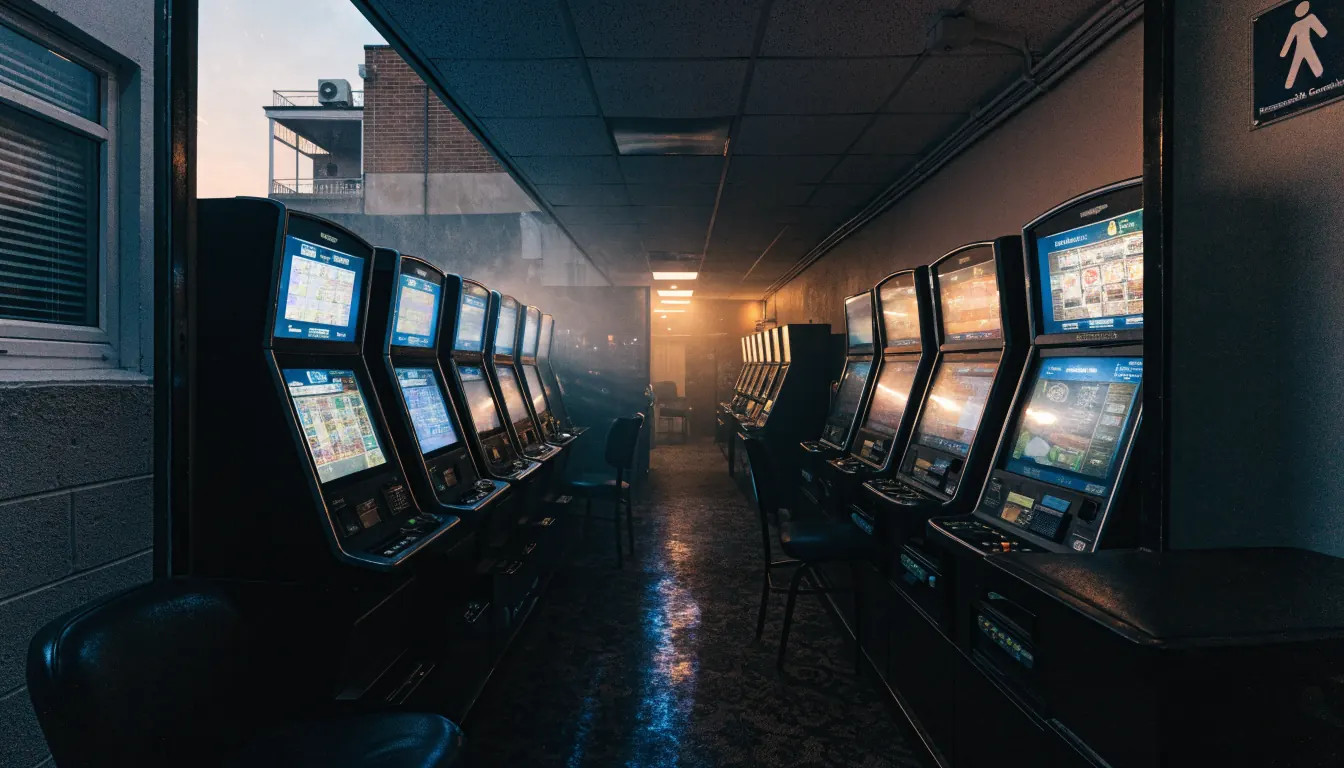
When I hear “pokies parlour”, I picture a place you can walk into: a physical gaming venue, not a website with a similar name or a page that happens to load on your phone. In Australia, that distinction matters. A casino venue operates under a licence issued by the state or territory where it is located. That local licence belongs to the venue and its jurisdiction; it does not turn an online casino into a licensed Australian service.
The phrase can sound as if it describes one particular kind of room, or even a single national brand. It doesn’t. People may use “pokies parlour” casually to mean a venue with casino gaming, but the useful point is that the setting is physical. A parlour-style search term is not evidence that a matching online parlour exists, and a name borrowing casino language does not establish who runs a site or what rules apply to it.
I used to treat familiar wording as a kind of reassurance. If something looked like a local venue or used local gambling terms, I assumed it probably belonged to the same regulated world. That was a lazy shortcut. A physical casino’s state or territory licence says something about that property. It says nothing by itself about a separate website using similar words.
Choosing a pokies parlour-style casino in Australia means checking the details that matter to you before you play. This list offers a concise reference to the known licensing, payment and deposit information for each operator.
JustCasino
JustCasino is listed with a licence from the Curacao Gaming Control Board. Check whether that licensing information meets your needs before you play.
Kingmaker
Kingmaker lists crypto payouts at around 90 minutes and fiat payouts at 1–5 days. Its minimum deposit is A$30.
SpinsUp
SpinsUp is listed under Curacao Gaming Control Board licence OGL/2023/174/0082, held by Dama N.V. You can use that licence detail as part of your checks.
DragonSlots Casino
DragonSlots Casino is listed with a Curacao Gaming Authority licence associated with Jumpman Gaming Ltd. Review that licensing detail as you consider the operator.
House of Pokies
House of Pokies lists an international iGaming licence, though the jurisdiction is not named in the source. PayID payouts are listed at 1–24 hours, with a A$30 minimum deposit or A$10 for PayID.
Bizzo Casino
Bizzo Casino is listed with a Curacao Gaming Control Board licence held by TechSolutions Group N.V. You can take this licensing information into account when assessing the operator.
LevelUp Casino
LevelUp Casino is listed under Curacao eGaming licence OGL/2023/174/0082, held by Dama N.V. Its minimum deposit is A$15.
Golden Pokies
Golden Pokies is listed with a Curacao licence. That is the licensing information available here for your review.
SkyCrown
SkyCrown lists crypto payouts at around 10–15 minutes and fiat payouts at 1–5 days. Its minimum deposit is A$30, and it is listed with a Tobique Gaming Commission licence.
Ricky Casino
Ricky Casino lists crypto payouts under one hour and PayID payouts at 1–3 business days. Its minimum deposit is A$20, or A$30 to qualify for the bonus.
That’s the split.
Australian casinos are regulated at state and territory level, with each property holding a licence from its local jurisdiction. So “licensed casino” is a description of a real venue’s legal position where it operates, not a loose label that can be carried over to any online service. The difference is easy to miss when a page uses familiar language, polished graphics and a venue-like name. None of those details is the licence.
The law draws a separate line around online casino-style gambling. The Interactive Gambling Act 2001 makes it illegal for operators to provide real-money online casino games to people physically located in Australia. That includes casino-style games such as slots, poker and table games. So when I use “casino” in the context of a physical Australian venue, I’m not using it as shorthand for an online casino that Australians can legally play for money. They are different things, under different rules.
This can make the wording around “pokies” confusing. The word may appear in a venue description, a business name or an online advert, but the word alone tells you very little. It does not prove a place is a casino, that a website is connected to a licensed venue, or that an online service is permitted to offer real-money casino games in Australia. The label is only a label. Annoying, but useful to remember.
 Real-Money Pokies on Android in AustraliaThe Interactive Gambling Act 2001 prohibits operators from offering real-money pokies to people in Australia; the guide also covers apps, free play…
 Online Casino Australia for Real Money: What to KnowLearn what “real money” means, how Australian rules distinguish players from operators, and why no Australian-licensed real-money online casino exists.
There are more than 20 full-scale casinos across Australia’s eight states, according to a specialist review. That’s a count of physical casinos, not a count of websites, and it should not be mistaken for a list of online services. Major Australian casinos operate around the clock, but that detail also belongs to the venue itself. A website displaying a similar name or imagery does not inherit the venue’s hours, licence or status.
I’m wary of any page that blurs those categories. “Australian casino” can be used to describe a physical property in Australia, while an online page may use the same words to attract attention. Those phrases can look nearly identical at a glance. They don’t mean the same thing legally. A real venue sits under its jurisdiction’s casino rules; online real-money casino games offered to people in Australia fall under the federal prohibition on operators providing them.
So if you’re trying to understand what a “pokie parlour casino” means here, start with the physical meaning: a licensed casino venue in Australia. Don’t let a familiar name, a local-sounding design or the word “parlour” do the work of checking what a service actually is. It won’t. The venue and the website are not interchangeable, even when their language is.
That distinction is worth keeping in your head before looking at anything else. It saves you from treating a venue licence as a blanket approval for online gambling, or assuming that a site becomes local because it borrows local wording. I’ve made that kind of leap before. It’s a bad shortcut.
Attention: A physical casino's state or territory licence does not apply to separate websites using similar names or local gambling terms.
When you look for a pokies parlour in Australia, the map can make the landscape seem simpler than it is. A count of gambling facilities is not automatically a count of casinos, and a city-level tally does not tell you what kind of venue each listing refers to. I’ve learned not to treat a neat number as a ready-made directory.
One specialist casino review identifies Sydney, New South Wales, as the country’s largest gambling city, listing 11 gambling facilities there. That is a snapshot from a particular type of source, not a permanent official ranking. “Largest” sounds definitive; what it really means here is that the review counted the most facilities in Sydney. It does not establish that all 11 are full-scale casinos or that the same count will remain current.
The same review’s figures place three casinos across three cities in the Northern Territory. That gives a broad sense of the spread, but it is still a count attributed to a specialist review rather than a map of every gambling venue in the territory. A city count and a casino count answer different questions. Keep them separate.
For a specific address, Lasseters Casino is at 93 Barrett Drive in Alice Springs, Northern Territory, with the postcode NT 0870. That puts a named venue in the territory’s central town, rather than leaving the location at the level of a state or city tally.
On the Queensland coast, Jupiters Gold Coast Casino & Hotel sits on Broadbeach Island in the Gold Coast area. The island setting is a useful way to orient yourself when planning around the venue; it is not a street address.
 Highest Payout Online Casino in Australia: RTP ExplainedLearn how slot RTP describes theoretical returns over extensive play, why it cannot predict a session, and how payout rates differ from…
 House of Pokies Casino Australia: What to CheckSee how Australian rules apply, what to check in free-play and bonus terms, and why offshore access is not proof of local…
Those details are more useful than a broad claim that one city has “the best” parlours. A venue name and a place you can locate are concrete. A ranking built from an unclear mix of gaming rooms and casinos is not.
Australia’s gambling geography also depends on what someone means by “facility.” A list might use the word for a casino, another gaming venue, or a broader gambling location. The label matters: if a figure describes gambling facilities, don’t quietly read it as a tally of casino properties. That small distinction can change what a map appears to show.
I’d use city counts as orientation, then verify a named venue’s location before setting out. The Sydney figure points to a concentration in one city; the Northern Territory count shows casinos spread across several cities; and the two named addresses anchor the picture in Alice Springs and the Gold Coast. None of that turns a general count into a complete, current directory.
So, if a result says “parlour” or “casino” without making clear what it has counted, take the label slowly. On a map, a precise venue location beats a grand ranking. Less noise, more ground.
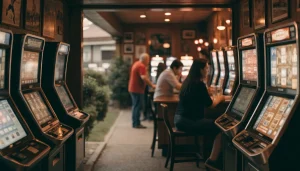
“Parlour pokies” can sound like a distinct kind of venue or a standard room set-up. The useful figure is more specific: across Australian casinos, 3,308 gaming machines are both endorsed on venue licences and installed.
That wording matters. It describes machines that meet both conditions; it is not a count of every machine that could ever be permitted, nor a promise that you will find the same number at each casino. A national total tells you about scale across the sector, not what is available in one room.
Across Australian casinos, 3,308 gaming machines are both endorsed on venue licences and installed.
I used to hear a big total and picture every venue as much the same. That is an easy assumption to make, but the figure does not support it. It gives no breakdown by property, layout or the share of a casino devoted to machine gaming. So it cannot tell you whether a particular venue feels compact or sprawling, or what you will see when you walk in.
There is another distinction worth keeping straight: a licence endorsement and an installed machine are separate pieces of the description. The national count covers machines that are licensed for the venue and actually installed. It is not a measure of activity, popularity or how often machines are used.
So if you are trying to understand the phrase, think of it as shorthand for casino gaming machines in a physical venue, not a guaranteed format or identical experience. The verified national count is 3,308; anything more specific needs information about the individual casino. Big total. Not a floor plan.
For casino entry in Australia, the baseline is straightforward: you must be at least 18. That minimum applies nationwide, so a VIP label or a special area inside a casino does not make the age requirement disappear.
Bring valid photo ID. Major Australian casinos require it for entry, and it is sensible to have it ready rather than assume staff will accept an explanation or a photo of a document on your phone. I would not treat a booking, invitation or membership status as a substitute for identification.
 Real Money Pokies in Australia: App or Browser?Learn why Australian pokies sites usually run in a mobile browser, how that differs from an app, and what to check before…
 Android Casino Play in Australia: Apps, Risks and LimitsLearn why Android casino play often happens in a browser, how bonuses and payments can snag, and what the Interactive Gambling Act…
“VIP” sounds like a separate doorway with separate rules. In practice, it describes a status or area, not an exemption from the basic age and ID checks. The exact arrangements for a particular space can depend on the venue, so don’t assume that the phrase alone tells you who may enter or what documents are accepted. Check directly with the venue if you need details before travelling.
There is also a difference between entering a casino’s wider building and entering its gaming areas. A venue may contain restaurants or entertainment spaces with their own access arrangements, but that does not lower the age threshold for casino entry. If you are going with someone under 18, confirm the rules for the specific part of the property rather than relying on a general description of the venue.
The useful checklist is short: be 18 or older, carry valid photo ID, and verify any separate access conditions for a VIP area with the venue. No clever workaround.
I used to read casino reviews as if “excellent atmosphere” meant someone had checked something useful. It often meant little more than a confident adjective. A review of a physical Australian casino is more valuable when it separates things that can be confirmed from impressions that belong to the reviewer.
The strongest starting point is the venue’s jurisdiction. Australian casinos are regulated by the state or territory where each property operates, and each property holds a licence issued by that local jurisdiction. A careful review should name the relevant jurisdiction and make clear that licensing is a regulatory fact, not a verdict on the venue’s service, comfort or value. Those are separate questions.
That distinction is easy to miss. “Licensed” sounds like a broad endorsement; it isn’t. It tells you there is a local licensing framework for the property. It does not prove that every glowing claim in a review is accurate, or that a particular visit will match someone else’s experience. Keep the label in its lane.
I now look for the basis of a review before taking its verdict seriously. Does the writer say what they personally observed, or repeat promotional copy? Are factual claims clearly separated from opinion? Is the review dated, so you can tell when the account was written? If it gives a firm detail about licensing, does it identify the state or territory responsible rather than using “regulated” as a vague seal of approval?
A useful review can describe the reviewer’s experience without pretending it is universal. “I found the room noisy” is an honest impression. “The venue is always noisy” is a much larger claim, and needs more than one person’s visit to support it. The same goes for statements about staff, service and general atmosphere. I have trusted a tidy paragraph that sounded authoritative, then realised it never explained what the writer actually saw. My mistake.
Promotional language deserves a second look, too. When a review calls a place “premium” or “unmissable”, I want to know what those words refer to. If there is no concrete observation behind them, they are decoration. A review does not become independent simply because it has a star rating, a long description or a confident tone.
There is also a difference between reviewing a venue and making claims about a particular person’s likely experience. Your priorities may not match the reviewer’s. One person may care about the setting; another may care about whether the information is clear and current. A useful account tells you what it can establish and leaves room for your own judgement.
 Golden Pokies Casino Australia: Legal Access and PlayLearn what online access means, how Australian rules apply, and what to check in bonus terms, RTP and withdrawals. ACMA blocks non-compliant…
 Australian Mobile Casinos: Access, Payments and SafetyLearn how browser and home-screen PWA access work, why casino apps are rarely listed in Australian app stores, and what to check…
When I read pokies parlour reviews now, I treat the verdict as opinion and the licensing detail as something to verify separately. I don’t let a polished score do the work of evidence. Look for the jurisdiction, the date, and a clear line between fact and personal impression. If those basics are missing, the praise may still be sincere—but it hasn’t earned much trust.
That’s the test.
A promise of “free spins” sounds simple: tap a button, get something without paying. “No deposit” sounds even cleaner. But in Australia, those phrases attached to real-money online casino games should set off an alarm, not start a sign-up checklist. The Interactive Gambling Act 2001 prohibits operators from providing online casino-style games to people in Australia, and advertising those services to an Australian audience is also banned.
That changes how a promotion should be read. A banner offering a no-deposit bonus, free chips or spins is not just a deal with small print to decode. It may be advertising a prohibited service. A polished page, a familiar phrase or an apparent offer does not make that service lawful to provide here.
I learned the hard way that “free” is often the word doing the most work in an advert. It can make you focus on the gift and skip over who is offering it, what it leads to and whether the offer belongs in the Australian market at all. Here, the first question is not how to claim it. It is whether an online casino promotion should be targeting Australians in the first place.
Prohibition
The Interactive Gambling Act 2001 makes it illegal for operators to provide real-money online casino games or advertise these services to people in Australia.
A no-deposit sign-up bonus is presented as a reward that does not require an initial payment. Free chips and free spins are other ways promotional copy may frame an inducement to try casino-style gambling. The wording varies; the underlying purpose is to draw attention to an online gambling service.
It is tempting to treat the offer as harmless because there is no immediate payment. That misses the point. A promotion can still encourage you to open an account, visit a gambling site or try a service that Australian law prohibits operators from providing to people physically in Australia. “No deposit” describes a claim about the offer, not its legal status.
The same applies when a page calls itself a pokies parlour, a casino or a social club, or when it uses “free” to make the invitation feel low-risk. Labels do not alter what the service does. Online casino-style games—including slots, poker and table games—are treated as prohibited interactive gambling services when offered to customers in Australia. A bonus attached to that activity does not turn it into something else.
That is why I would not read a no-deposit offer as a clever way around the law. It is still part of the sales pitch. The wording may put the reward first and the gambling service in the background, but the context matters more than the headline.
Promotional language is built to make a choice feel easy. “Welcome” suggests a friendly start. “Free” suggests you have little to lose. A line about a bonus can distract from the basic question: is this an online casino service being offered to Australians?
The law draws a clear boundary around operators providing real-money online casino games to people in Australia. Advertising those services to Australians is also banned. So an advert for online casino play is not evidence that the service has been checked, approved or made lawful. It is simply an advert—and, in this context, a reason to be cautious.
Nor does a disclaimer buried below a bright offer change the nature of the promotion. A site can present a bonus with conditions, describe itself as international, or say that a user is responsible for checking local rules. None of those phrases makes the underlying offer an Australian-authorised online casino promotion. A disclaimer can shift attention; it cannot rewrite the law.
I have made the mistake of reading the large type and treating the small type as the only risk. That is a bad order to do things in. With online casino bonuses, the central issue comes before any discussion of eligibility or conditions: the service itself is prohibited for operators to provide in Australia, and its advertising is prohibited too.
The Australian Communications and Media Authority (ACMA) oversees compliance with federal interactive gambling rules and enforces the Interactive Gambling Act 2001. When a website provides prohibited interactive gambling services or advertises them in Australia, ACMA can ask Australian internet service providers to block access to it.
That blocking power is part of enforcement. It does not operate as a quality mark, a directory or a way for a site to become legitimate by changing its web address. A website being visible at one point—or an advert appearing on a page—should not be mistaken for official approval.
Since November 2019, ACMA has reported blocking more than 1,455 illegal gambling and affiliate websites. Additionally, reports on illegal services withdrawing from the market since 2017 vary between over 190 and more than 210 withdrawals.
ACMA has reported blocking more than 1,455 illegal gambling and affiliate websites following enforcement activity since November 2019. That figure covers gambling and affiliate sites, not just bonus pages. It shows the scale of action taken against material connected with illegal gambling services; it does not certify any remaining promotion or provide a safe list of offers.
There is also a stated disagreement in counts of services that have left the Australian market since enforcement began in 2017. One reported figure is more than 210 withdrawals; another is over 190. Those figures should not be quietly combined or treated as the same count. The point they both convey is narrower: enforcement has been followed by illegal services withdrawing from the Australian market, while the published totals differ.
No magic stamp. No assurance.
A bonus may be described on a page that does not operate the gambling service itself. Affiliate pages can compare promotions, explain how to register or direct readers towards an online casino. The presence of a review or comparison does not make the underlying promotion permissible. ACMA’s blocking actions have included affiliate websites as well as gambling websites.
That matters because a page can look like consumer advice while doing promotional work. It may repeat the operator’s claims, emphasise a free reward and make the next step seem routine. If the destination is an online casino service prohibited for operators to provide in Australia, wrapping the link in review language does not change what the page is promoting.
I have seen how easily a confident tone can feel like verification. A tidy table, familiar terms and a paragraph labelled “terms” can create an impression of scrutiny. But presentation is not proof. In this market, a bonus page is not a substitute for an Australian licence for online casino play; operators are not permitted to provide that service to people here.
The same caution applies if a page calls itself a guide rather than an advert. Look at what it asks you to do. If it is steering you towards an online casino, encouraging account creation or presenting a casino reward as a reason to try the service, the practical effect is promotional, whatever label appears at the top.
A free chip can sound like a token gesture. Free spins can sound like a harmless preview. Neither phrase should distract from the service being promoted. If the offer is tied to online casino-style gambling, the promotional language does not remove the legal problem.
It also does not help to assume that an offer is safe because it asks for no immediate payment. The absence of a deposit is not the same as the absence of risk, and it does not establish that the operator may legally serve Australians. A “no deposit” label tells you what the advertisement wants you to notice. It does not tell you whether the service is allowed.
I would be especially careful with pages that turn a reward into a sequence of prompts: register, accept, play, then read the conditions. That sequence is a sales journey. The important question is not whether the first click costs money. It is whether the online casino service is being offered to Australians at all.
There is no need to compare the size of offers or search for a better version of the same pitch. Doing that keeps the focus on the inducement, when the core issue is the prohibited service behind it. A different label, a new promotion or an alternate website address does not change that.
If you come across a real-money online casino promotion aimed at Australians, do not treat it as a recommendation or as evidence of local approval. Avoid following its links or supplying account details. You can check information about ACMA and the Interactive Gambling Act through official government sources, rather than relying on the promotional page to explain its own status.
The distinction is important: ACMA can take enforcement action, including requesting that internet service providers block sites associated with prohibited gambling services or their advertising. That is not the same as a regulator reviewing every advert before it appears. A promotion can be visible without being lawful or endorsed.
And a blocked page disappearing is not proof that the offer has been resolved. Enforcement can affect access to websites, while promotional material may continue to circulate through other pages or addresses. The appearance of a new link does not make the underlying service legitimate. Treat the offer and the destination with the same caution.
I would not use a bonus as a reason to hand over personal details, install anything or create an account with an online casino. The “free” part is the hook. The legal status of the service is the part that matters.
For support with gambling concerns, the National Gambling Helpline is available through gamblinghelpline.org.au. Asking for help is not an admission of failure; it is a practical step if gambling is affecting your choices or your life. A promotion is designed to pull you forward. You can stop there instead.
I used to treat a working website as a kind of reassurance. The page opened, the sign-in box appeared, and the whole thing looked polished enough. I took that as evidence that someone had checked it properly. That was a bad shortcut. A website loading in Australia does not show that its operator is authorised to provide online casino games here.
The legal position is different from what a familiar-looking site may suggest. Under the *Interactive Gambling Act 2001*, it is illegal for operators to provide real-money online casino games to people physically in Australia. That includes slots and online versions of games such as poker, blackjack and roulette. A company’s overseas registration, or a licence from another country, does not make those services lawful to provide to customers in Australia.
That distinction matters whether you are looking for a parlour-style experience online, hoping to play without stakes, or considering depositing real money. A screen can imitate the language and layout of a physical venue, but it does not turn an online service into a licensed Australian casino. And a “play free” label deserves a careful read: it does not by itself tell you what happens after registration, whether real-money gambling is offered elsewhere on the site, or what rules apply to the service.
Australian internet service providers can be directed to block access to websites that provide prohibited interactive gambling services or advertise them. The Australian Communications and Media Authority (ACMA) enforces the federal rules and can request those blocks. As a result, an address that fails to load is not necessarily evidence that a service has vanished, and an alternate address appearing later does not establish that it has become lawful.
An address failing to load or the appearance of an alternate domain does not establish that an online casino service has become lawful in Australia.
A technical account of Australian website blocking describes how these measures can affect which domains resolve through local internet providers, while alternate addresses may appear over time. That is a description of how access can change, not a green light to follow a new address. I have seen how quickly a broken link can be treated as a small technical snag instead of a reason to pause. Wrong instinct.
ACMA has taken blocking action against illegal gambling services, including alternate domains associated with Fair Go, as reported in a specialist review. The important point is not the particular name or address: a service being reachable through one domain, or shifting to another, does not prove it is approved to offer online casino gambling in Australia. Nor does a blocked page tell you everything about the operator behind it.
ACMA says it has blocked more than 1,455 illegal gambling and affiliate websites since enforcement action began in November 2019. There is also a discrepancy in published figures for illegal services that have withdrawn from the Australian market since 2017: one account gives a figure above 210, while another reports more than 190. Those totals are not interchangeable, and neither is a live check of a particular site.
A page opening, an account form accepting details, or a payment screen appearing tells you something about the site’s technical operation. It does not demonstrate that the operator may legally provide online casino games to people in Australia. The same goes for a professional design, customer-support chat, claims about fairness, or a badge that looks official. None changes the Australian law.
I would not use access itself as a test of legitimacy. Blocking is aimed at access to prohibited services, and the addresses affected can change. So a site that remains reachable has not passed a regulatory test; a new address has not acquired Australian approval by appearing online. The simple test I once relied on—“it works, so it must be fine”—doesn’t hold up.
The law targets operators providing or advertising prohibited services, not the person who comes across a site. The legal framework does not impose a fine or criminal prosecution on an individual simply for playing at an offshore casino. That is not an endorsement of the service or a promise about the practical risks of handing over personal or payment details. It is just a different question from whether the operator is allowed to offer the games in Australia.
ACMA can investigate and take enforcement action when an operator provides or advertises prohibited online gambling services. The maximum daily penalty under the Act is $360,000 for an individual and $1.8 million for a body corporate. Those figures concern penalties under the law; they are not a warning that a player automatically faces those amounts for visiting a site.
If you are trying to work out whether an online casino is Australian-licensed, the key point is that real-money online casino services are prohibited for operators to provide to people in Australia. There is no local online-casino licence that makes such a service lawful here. A foreign licence, a functioning account, or a domain that resolves through your internet provider cannot change that.
That also means I would not treat a “real money” label as proof of a legitimate Australian option. It describes what a site claims to offer, not what it is permitted to offer here. Promotional language can make the boundary look softer than it is. It isn’t.
For reliable information about the law and blocking actions, ACMA publishes material on its official website, and the *Interactive Gambling Act 2001* is available through the federal legislation register. Those are useful places to understand the regulator’s role; they are not directories of online casinos. When a page loads, that is all you know for sure: the page loaded.