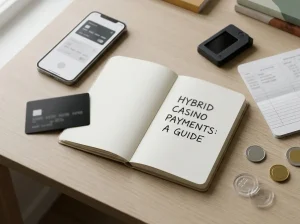
A practical look at what MiFinity listings do—and do not—establish about deposits, withdrawals, bonuses and Australian access.

A search for Australian online pokies that take MiFinity can make the answer look straightforward: find a casino name, see MiFinity listed, and assume the payment option is ready to use. I used to treat payment logos as solid proof. They aren’t. A name or badge on a page does not, by itself, establish that an operator accepts MiFinity from someone in Australia.
That distinction matters here. A claim that a casino is “MiFinity-friendly” may sound precise, but it leaves the key point unresolved: whether the service is actually available to an Australian customer. Marketing language is easy. A dependable answer needs evidence about the operator, the payment method and the customer’s location.
There is a more basic issue with the phrase “Australian online casino”. It can mean a casino based in Australia, a site that advertises to Australians, or an offshore website that an Australian resident can reach. Those descriptions are not interchangeable, and none of them proves that MiFinity is accepted. A page using Australian wording or displaying prices in Australian dollars does not, on its own, settle either the payment question or the legal one.
If you’re looking for an Australian casino that accepts MiFinity, check that the payment method is currently available to you before depositing. Use the details below as a reference for what is known about each listed operator.
JustCasino
JustCasino is listed with a Curacao Gaming Control Board licence. No payment or payout details are provided here.
Kingmaker
Kingmaker lists a minimum deposit of A$30. Its stated payout times are around 90 minutes for crypto and 1–5 days for fiat.
SpinsUp
SpinsUp is listed under Curacao Gaming Control Board licence OGL/2023/174/0082, held by Dama N.V.
DragonSlots Casino
DragonSlots Casino is listed under a Curacao Gaming Authority licence held by Jumpman Gaming Ltd.
House of Pokies
House of Pokies has an international iGaming licence, though the jurisdiction is not named. Its stated PayID payout time is 1–24 hours; the minimum deposit is A$30, or A$10 with PayID.
Bizzo Casino
Bizzo Casino is listed with a Curacao Gaming Control Board licence held by TechSolutions Group N.V.
LevelUp Casino
LevelUp Casino is listed under Curacao eGaming licence OGL/2023/174/0082, held by Dama N.V. Its minimum deposit is A$15.
Golden Pokies
Golden Pokies is listed with a Curacao licence. No payment or payout details are provided here.
SkyCrown
SkyCrown is listed under the Tobique Gaming Commission. Its stated payout times are around 10–15 minutes for crypto and 1–5 days for fiat, with a minimum deposit of A$30.
Ricky Casino
Ricky Casino lists a minimum deposit of A$20, or A$30 to qualify for the bonus. Its stated payout times are under an hour for crypto and 1–3 business days for PayID.
The law changes how this subject needs to be read. Under the Interactive Gambling Act 2001, operators are prohibited from offering online casino games to people in Australia. That includes online casino-style games such as pokies. The prohibition is directed at operators; the Act does not explicitly criminalise an individual player for using an offshore site.
That does not turn offshore gambling into a protected consumer service. Australian consumer law does not protect people using offshore casinos. If something goes wrong, a familiar-looking cashier or a payment brand you recognise is not a substitute for those protections. I wouldn’t read “available to Australian players” as meaning “approved in Australia” or “covered by Australian consumer law”. It means only what the operator’s claim actually supports—and those are very different ideas.
I’ve learned to pause when a page bundles those ideas together. “Australian”, “accepted” and “secure” can all appear close to a payment logo, while answering different questions. A site might be accessible from Australia without being permitted to offer online casino games here. A payment method might be named on a page without that establishing its availability to a particular customer. And neither statement says that Australian consumer law will protect a player using an offshore casino.
For readers comparing MiFinity with other ways to pay, the honest answer is narrow: a general claim that a casino accepts it is not enough to establish that the method is available to Australians.
That may feel less useful than a list of names. I get it. That is not a useful shortcut. It’s a bad bet before any bet is placed.
It also helps to keep “Australian” in perspective. A casino may use Australian-facing language while operating offshore. The label doesn’t tell you where the operator is based, what rules apply to it, or whether a MiFinity option is genuinely available to an Australian customer. And a payment logo cannot answer those questions on its own.
If you see a claim that a site accepts MiFinity, read it as a claim—not a guarantee and not an endorsement. The wording may be broad, out of date or aimed at customers in a different location. Most importantly, it does not change the Australian legal position. Operators are prohibited from offering online casino games to Australian residents, and people using offshore casinos do not receive protection under Australian consumer law.
I know the temptation to look for the one simple answer: which pokies site takes MiFinity? But a payment-method claim cannot make an offshore casino lawful to offer here, and it cannot provide consumer protections that aren’t available. Better to keep those points separate than let a neat cashier label do too much work. No magic logo.
Legal Risk
Under the Interactive Gambling Act 2001, operators are prohibited from offering online casino games to people in Australia, and you are not protected by Australian consumer law when using offshore casinos.
I would not treat a payment logo, a search result or a broad claim about a cashier as proof that a MiFinity deposit will work for you. A payment method can sound straightforward in a headline; the useful question is what the actual service permits, and whether using it is lawful and protected where you live. Those are separate issues.
For someone in Australia, the legal point comes first. The Interactive Gambling Act 2001 prohibits operators from providing real-money online casino games to people physically located in Australia. The Australian Communications and Media Authority enforces that law. Australian consumer law does not protect players who use offshore casinos. That is not a small-print detail to weigh against a convenient payment route. It changes the risk around the whole transaction.
I know how easy it is to focus on the cashier and leave the bigger question for later. You see a familiar payment name and start thinking about how to fund an account. I have made that kind of leap myself: a payment option looks reassuring, so I assume the rest of the setup is equally clear. It isn’t. A payment method does not make an offshore casino lawful to use in Australia, and it does not supply local consumer protection.
There is one general step worth understanding before any financial transaction: online casinos typically require customers to complete a Know Your Customer assessment. That is an identity-checking process. It is distinct from whether a cashier offers MiFinity, and completing an identity check should not be mistaken for confirmation that a payment will be accepted or that the service is suitable for an Australian resident.
If you encounter a request for identity information, pause and consider who is collecting it and what protections apply. Do not assume that a polished account screen or a familiar payment brand makes sharing personal details risk-free. An identity assessment can involve sensitive information; the decision to provide it deserves more care than clicking through a payment menu.
The same goes for any wording about a deposit. “Easy” is an advertising word; what it really means depends on the actual terms, the account and the payment route. I would not infer a deposit amount, fee or processing time from a generic description. Nor would I assume that a method shown somewhere is available to every customer or for every transaction. Those are details that require clear, current information from the service itself—and even clear payment terms do not change the Australian legal position.
A cashier can make a transaction feel like the main decision. It is only one part of it. Before you share payment or identity details, take a moment to ask what the service is offering, where it operates, and whether that offer can lawfully be made to someone in Australia. If the answer is obscured by promotional language, that is a reason to stop rather than fill in the gaps yourself.
I also try not to confuse a payment provider with a safety guarantee. A recognised name may tell you which route a transaction is supposed to use; it does not tell you whether an offshore casino is accountable to Australian consumers, whether a particular payment will go through, or what recourse you would have if something went wrong. A neat interface is not the same thing as protection.
There is no useful shortcut in guessing. A proposed deposit amount in a headline does not establish the amount a cashier would accept. A claim that MiFinity is supported does not, by itself, establish the terms attached to using it. If the details are unclear, I would not proceed on the strength of an assumption. That is a boring answer. Better boring than surprised.
The point here is not to find a clever way around uncertainty or to dress an offshore casino up as a safe option. For Australians, operators are prohibited from providing real-money online casino games to people in the country, and Australian consumer law does not protect people using offshore casinos. Keep that context in view before considering any deposit, and do not treat an identity check or payment option as approval of the underlying service.
A site described as a “MiFinity casino” may sound as though the payment method is confirmed, but a label is not proof. I’ve learned to treat polished payment claims as the start of a check, not the result. The useful question is not whether a page uses the word “accepts”; it is what that claim actually establishes, and how clearly it applies.
A credible claim should identify the operator and specify the relevant market. Payment options can differ between countries, and a statement about one location does not establish what is available to someone in Australia. The claim should also be current and attributable: a dated operator statement is more meaningful than a copied list with no clear author or update history. Even then, it is evidence of what the operator says, not a guarantee that every customer can use the method.
That distinction matters when a page calls itself one of the best MiFinity sites. “Best” is a judgement, not a payment fact. A ranking may blend together unrelated criteria—design, reputation, promotions or game selection—and leave the central question unanswered. If a list does not explain how acceptance was established, or what its ranking measures, the confident headline is doing more work than the evidence.
I would also look closely at the wording. “MiFinity supported” could mean the name appears somewhere on a payment-method page. It does not, by itself, tell you whether the statement applies to Australian users, whether the method is currently available, or what the operator means by “supported.” Those are separate points. A page that slides between them can make a narrow claim sound much broader than it is.
The source of the claim matters too. An operator’s own terms or payment information can show what that operator represents, while a third-party review is another party’s account of it. Neither should be treated as interchangeable with a current, individual result. If a review makes a broad claim but gives no date, jurisdiction or supporting detail, there is little basis for treating it as definitive. A string of copied descriptions does not become stronger just because several pages repeat it.
A credible claim should identify the operator, specify the relevant market, and be dated and attributable rather than a copied list with no clear author.
I’m wary of “instant” and “top” for the same reason. They are persuasive words, but they do not tell you what was measured or when. A review that ranks sites should make its criteria plain and distinguish a confirmed payment-method statement from its own opinion. Without that separation, the ranking can leave you with a neat order and a vague answer.
There is another trap in lists of sites that supposedly take MiFinity: the list may combine claims about accepting deposits with claims about handling withdrawals. Those are not identical claims. A broad label should not be read as proof of every possible use of a payment method. The wording needs to say what it means, rather than letting the reader fill in the blanks.
The same care applies to claims about Australian pokies sites. A page can be written for Australian readers without showing that its payment information applies to them. Local wording, currency symbols or an Australian flag are presentation choices; on their own, they do not substantiate a payment claim. Nor does a review’s confident tone establish that its information has been checked against the operator’s current terms.
So I would not treat a “best MiFinity casino” badge or a long list as enough to support a decision. Look for a specific, dated statement, clear market scope and precise wording about what is being claimed. If those pieces are absent, the honest reading is that the page has not shown its working. No grand ranking needed.
“Instant withdrawal” sounds like a useful promise until you ask what it actually describes. It might refer to an operator approving a request, a payment provider processing it, or money appearing in an account. Those are different stages, and a label on a page does not tell you how long the whole process takes.
So I wouldn’t treat “instant MiFinity withdrawal” as a confirmed feature. That wording can describe an expectation without establishing what happens after a request is submitted. A claim is not a clock.
I learned to be wary of payment wording that compresses several steps into one cheerful adjective. “Fast” is not the same as “credited to your account now”; “processed” may not mean the same thing as “received”. With no clear description of the stages, you cannot tell which part is supposedly instant, or what remains to happen afterwards. That distinction matters most when you are counting on the money being available by a particular time.
I also wouldn’t borrow timing claims from another payment method and apply them to MiFinity. A card, bank transfer, e-wallet or other service can have its own process; knowing something about one does not establish how another works. Even a general claim about casino payments cannot settle the MiFinity-specific question. Different method, different unknowns.
Attention A claim of an "instant" withdrawal is often a label and not a reliable estimate, as it may refer to different stages of the process.
The same caution applies to fees and availability. A statement that a withdrawal is instant does not, by itself, tell you whether MiFinity can be selected for cashouts, whether a fee applies, or whether the payment route depends on how an account was funded. If the terms are not clear before you make a decision, don’t fill the gaps with an advert’s confidence.
A sensible way to read a speed claim is to look for its exact meaning and conditions, not to assume the best-case interpretation. Does it mean the request is reviewed quickly, or that funds reach the destination? Does it apply to MiFinity withdrawals specifically, or is it a broad statement about payments? If the wording leaves that unclear, “instant” is only a label. It is not a reliable estimate for your cashout.
There is a bigger Australian context here, too. The Interactive Gambling Act 2001 prohibits operators from offering online casino games to people in Australia, and the Australian Communications and Media Authority enforces that law. Australian consumer law does not protect players using offshore casinos. Those points do not make a payment claim more reliable; they are reasons not to mistake a confident cashout promise for protection or a dependable remedy if something goes wrong.
I wouldn’t plan around an instant MiFinity withdrawal, or treat the phrase as proof that cashouts are available. A specific, clearly stated condition is more useful than a speed slogan—but even then, it cannot change the legal position for Australian residents. No magic button.
“Accepts MiFinity” sounds like one clear yes-or-no claim. I’ve learned not to read payment labels that way. A casino could use the phrase to describe one part of its payment setup without telling you whether the method works for every kind of transaction—or whether it works for Australian customers at all.
For the claim to be useful, it needs to say what “accepts” covers. Does it mean MiFinity can be used to add funds, to receive a withdrawal, or both? Does the claim apply to the site generally, or to a particular account or location? Those are separate points, not details you can safely fill in yourself.
That distinction matters because a payment method appearing in a list is not the same as a confirmed option for your account. Nor does a broad statement establish that the same method is available when money leaves the account. I’ve seen how easy it is to read a confident label as a promise. It isn’t one.
The same goes for phrases such as “MiFinity casino” or “casino with MiFinity pay.” They may sound specific, but without clear terms they don’t tell you what the casino actually permits. I wouldn’t turn that wording into an assumption about deposits, withdrawals, or both. “Accepted” is doing a lot of work there.
This is not a recommendation to try an offshore site and see what happens. Australian law sets a different boundary: the Interactive Gambling Act 2001 prohibits operators from offering online casino games to people in Australia. Australian consumer law also does not protect players using offshore casinos. A payment claim does not change either point.
So when you see a general MiFinity acceptance claim, treat it as a label—not proof of a complete payment arrangement. It needs to distinguish the relevant transaction and customer eligibility before it means much. If it doesn’t, the wording leaves too much open to interpretation.
I used to assume that a method named on a site would work wherever I needed it. That was a convenient reading, not a careful one. The phrase “accepts MiFinity” on its own should not be taken to establish that a casino supports both deposits and withdrawals, or that either is available to Australian residents. No guesswork.
A payment method and a game catalogue are separate things. Seeing MiFinity mentioned beside a casino payment option would not, by itself, tell you which games are offered, whether any particular game can be opened, or whether payment choice changes access. I used to treat a payment logo as a kind of all-access pass. It isn’t.
That distinction matters when a page talks broadly about casino games with MiFinity. The wording can make it sound as though the method is tied to specific titles or that there is a special set of games available to people paying that way. Without clear, current details from the operator, those are different claims, not one fact. A payment label alone cannot establish them.
The same goes for references to MiFinity slot games or a slot game being “powered by” a payment method. MiFinity is a payment service; that does not make it a game provider or tell you what the catalogue contains. I would not infer that a particular title is available from a payment-method list, and I would not infer that a game accepts a particular method just because both appear on the same page. Different things. Easy to blur.
If you come across a claim connecting MiFinity and casino games, read its wording closely. Does it identify a game, or merely describe a payment option? Does it say the method is accepted for a transaction, or suggest it changes what you can play? Those statements are not interchangeable. A vague phrase like “games using MiFinity” may be shorthand, not a useful description of any actual game condition.
I’ve learned to stop at the exact claim instead of filling in the gaps myself. A general reference to MiFinity casino payments does not establish game availability, and a game listing does not establish payment availability. Neither tells you that a particular game is suitable or accessible to you in Australia. That needs its own reliable basis, not a leap from one label to another.
So, when you see MiFinity mentioned alongside a casino catalogue, don’t read it as a game-by-game assurance. Keep payment claims and game claims in separate boxes. The wording may bundle them together; that doesn’t make the connection real. No shortcut there.
When I see a claim about an Australian casino using MiFinity, I separate the payment question from the legal one. A cashier showing a payment method would not make an offshore casino lawful to offer here, and the name of a payment service does not change the rules.
Under the Interactive Gambling Act 2001, operators must not provide online casino games to people in Australia. The Australian Communications and Media Authority (ACMA) enforces that law. Its focus is on the services being offered by operators; the Act does not expressly make an individual player’s use of an offshore site a criminal offence. That distinction is not an endorsement or a suggestion that these services are safe to use. It is simply the difference between the law’s treatment of operators and players.
There is another practical point that matters if you are weighing an offshore site: Australian consumer law does not protect you when you use an offshore casino. If something goes wrong, you should not assume you can rely on the same local consumer protections that apply to Australian businesses. I used to treat a familiar payment logo as a kind of reassurance. It isn’t. A payment option says nothing about the protections available to you.
That is why phrases such as “Australian casino with MiFinity” need careful handling. They can sound like a straightforward description of a local service, but an offshore operator claiming to accept Australian customers is still operating within this legal context. Neither the Act nor ACMA’s enforcement role confirms whether any particular casino accepts MiFinity. Nor does a claim of acceptance establish that using the service is lawful or that you have consumer recourse.
So I would not read a MiFinity listing as a green light. The legal issue concerns the operator offering online casino games to people in Australia; the payment claim is a separate matter and must not be mistaken for a safeguard. No comfort there.
A mention of MiFinity beside a casino’s name does not tell you whether winnings can be sent back through that service. I’d keep those two claims separate: being able to pay in, if that is offered, is not proof that the same route is available for a cashout. A page calling itself a casino with MiFinity withdrawals still needs to spell out what it means.
For someone checking MiFinity withdrawals at online casinos, the practical details matter: whether the method is available for payouts, what conditions apply, whether a charge is involved, and how long a transfer takes. None of those details should be assumed from a broad payment-method label. In particular, “instant” is a sales word, not a timetable. Without clear, current terms for the specific service, I wouldn’t plan around it.
That distinction applies to searches for MiFinity cashouts at Australian pokies sites too. A reference to pokies or an Australian audience does not establish a withdrawal route or make a claim reliable. Nor can terms for another payment method tell you what MiFinity withdrawals would involve. Different method, different rules.
There is a more important Australian point before any payment decision. The Interactive Gambling Act 2001 makes it unlawful for operators to provide real-money online casino games to people in Australia. The Australian Communications and Media Authority enforces that law. Australian consumer law does not protect people who use offshore casinos, so a dispute about a cashout may not have the protections you expect at home. That is a serious gap.
I would not treat a “MiFinity cashout” label as a promise of availability, speed, or a particular process. Read the stated withdrawal terms carefully, and don’t infer more than they actually say. If the terms are vague, that uncertainty itself is worth taking seriously. No shortcut.
“Pay with MiFinity” sounds like a simple instruction. In practice, the phrase is only useful when it describes a payment option that is actually available for the transaction in question. A logo or line of promotional copy is not a reason to assume that a payment will go through, or that using a particular service makes a gambling site safe.
I’m wary of payment claims dressed up as convenience. A method’s name can make a site sound more familiar, but it does not tell you what happens after you select it. Nor should you take a payment-method claim as a recommendation to use an offshore casino. Those are separate issues.
For Australians, there is a more important point than the wording on a payment page. The Interactive Gambling Act 2001 prohibits operators from providing online casino games to people in Australia. The Australian Communications and Media Authority enforces that law. Australian consumer law does not protect people who use offshore casinos, either. A payment option does not change those protections or the legal position of the operator.
So if you are asking whether you can pay by MiFinity at a casino, keep the question narrow: a claim about a payment method is not evidence that the service is suitable or lawful for an Australian resident to use. I would not treat a cashier label as a green light. It isn’t one.
Australians are accustomed to moving between cards, mobile wallets and services linked to banks, such as PayPal. That familiarity can make another payment name feel routine. But familiarity is not proof of how a particular transaction will work, and it says nothing about the legal status of the gambling service.
“Easy payment” is a sales phrase, not a safeguard. Before acting on any such claim, separate the payment wording from the bigger question of whether the service may lawfully be offered to you and what protections you would have. In this case, the legal warning matters more than the method label. Don’t confuse the two.
A bonus labelled “MiFinity” can sound like a clear perk: pay with that wallet and get an offer. But the label alone tells you nothing about whether an offer exists, who can claim it, or what conditions apply. I’ve learned not to treat promotional wording as the terms themselves.
For a MiFinity-related casino bonus, the details that matter would include eligibility, any qualifying action, restrictions on use and the rules for claiming or keeping the offer. Without terms that spell those things out, you cannot safely assume that using MiFinity qualifies you for a promotion—or that every customer using it would be treated the same way. “Exclusive” is just a word until the conditions back it up.
I’m not going to dress up an unconfirmed offer as a recommendation. That is different from saying a bonus is impossible; it means a claim needs clear, applicable terms before you rely on it.
There is a more important point for Australian readers. Offshore casino promotions do not change the legal position: Australian consumer law does not protect people using offshore casinos, and Australian law prohibits operators from providing online casino games to people in Australia. A bonus does not make that risk disappear.
Read the terms, not the banner. If the offer’s conditions are unclear, don’t count it as value.
Check the casino’s cashier for American Express and confirm that deposits are available to customers in your location; a payment logo alone is not proof. In Australia, operators are prohibited from offering online casino games to residents.
Jackpot City Casino, Spin Palace, Ruby Fortune, Ignition Casino, Joe Fortune and PlayAmo are named as supporting Amex deposits for Australian players. That does not mean their casino games may lawfully be offered to people in Australia.
Yes, Amex casino deposits are processed instantly. Withdrawals can take up to five days to clear.
Yes, some online casinos accept Amex deposits, but others do not. A payment may also be declined if Amex or the cardholder’s bank blocks gambling transactions.
Amex deposits are typically free, but a casino may charge a 1.5% surcharge, and a 3% currency conversion fee may apply. Withdrawal fees can also apply, depending on the casino.
Amex casino deposits are processed instantly. Withdrawals can take up to five days to clear.