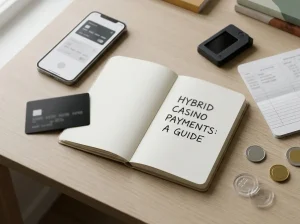
Carrier billing, bank transfers and PayID work differently, so the payment method and its conditions matter more than the device used.

I used to read “pay by phone” and assume it meant the cost would appear on my mobile bill. That phrase can mean two different things. Carrier billing puts a charge through a mobile provider, while paying on your phone can simply mean using a banking app on the device in your hand. The screen is the same; the payment route isn’t.
That distinction matters if you’re looking for a mobile casino payment charged to your phone bill. A mention of PayID does not mean the amount will be added to your telecom account. PayID moves money through a bank account. It is available through the New Payments Platform (NPP), which lets people send or receive money using an identifier such as a mobile number or email address. The number is an identifier linked to a bank account, not an instruction to bill your phone provider.
So “online casino pay by phone” can be misleading shorthand. It might mean someone wants to use a handset to make a payment, or it might mean they expect carrier billing. Those are not interchangeable. Using a mobile phone to open a banking app does not turn a bank transfer into a phone-bill charge.
If you plan to pay by phone, check which payment methods are available to you and what their terms are before depositing. This list gives you a starting point for reviewing each casino’s available details.
JustCasino
JustCasino is listed with a Curacao Gaming Control Board licence. Check the casino directly for its current phone-payment options.
Kingmaker
Kingmaker lists a minimum deposit of A$30, with crypto payouts taking about 90 minutes and fiat payouts taking 1–5 days. Check directly whether a phone-payment method is available to you.
SpinsUp
SpinsUp is listed under Curacao Gaming Control Board licence OGL/2023/174/0082, held by Dama N.V. Check the casino for current phone-payment options.
DragonSlots Casino
DragonSlots Casino is listed with a Curacao Gaming Authority licence held by Jumpman Gaming Ltd. Confirm directly which payment methods it currently offers.
House of Pokies
House of Pokies lists an international iGaming licence, though the jurisdiction is not named in the source. Its stated PayID payout time is 1–24 hours; the minimum deposit is A$30, or A$10 via PayID.
Bizzo Casino
Bizzo Casino is listed with a Curacao Gaming Control Board licence held by TechSolutions Group N.V. Check directly for its current phone-payment options.
LevelUp Casino
LevelUp Casino lists a Curacao eGaming licence, OGL/2023/174/0082, held by Dama N.V., and a minimum deposit of A$15. Check the casino for current payment methods.
Golden Pokies
Golden Pokies is listed with a Curacao licence. Confirm directly whether it offers a phone-payment method that suits you.
SkyCrown
SkyCrown lists a Tobique Gaming Commission licence, with crypto payouts taking about 10–15 minutes and fiat payouts taking 1–5 days. Its stated minimum deposit is A$30.
Ricky Casino
Ricky Casino lists crypto payouts in under an hour and PayID payouts in 1–3 business days. Its minimum deposit is A$20, rising to A$30 to qualify for the bonus.
There is a more important Australian context, too. Under the Interactive Gambling Act 2001, operators are prohibited from providing real-money online casino games, including pokies and table games, to people physically located in Australia. That means a page or payment label should not be read as confirmation that an online casino service is legally available here. A payment method does not make the underlying service lawful.
PayID itself is a banking payment service, not a casino product and not a mobile-network billing feature. The basic idea is that a user makes a payment through their bank, using the payment details provided for that transaction. A casino deposit flow that names PayID may ask the player to choose it, enter an amount and then confirm the payment inside their banking app. That describes a bank-mediated payment. It does not establish that the casino accepts a charge to a phone bill.
I find it helps to name the account the money leaves. With carrier billing, the charge is associated with the mobile provider’s account. With PayID, the payment is confirmed through a bank and comes from the bank account connected to the transfer. The fact you start it on a phone is just about the device. It tells you nothing, by itself, about whether your mobile provider is involved.
The wording can blur that line. “Mobile casino games you can pay by phone” sounds as if the phone is the payment method, but it may only describe playing or banking on a mobile device. Likewise, searching for pokies or online slots paid through a phone bill does not make phone-bill billing and PayID the same thing. Don’t treat a payment badge or a short label as proof of how the charge will be collected.
If you are comparing payment language, look for the actual route named: carrier billing, a bank payment, or PayID. If the description only says “mobile payment,” that phrase alone is not precise enough to tell you whether a telecom bill, card, or bank account is involved. Pause before entering payment details. A familiar phone number can serve as a PayID identifier, but that does not mean the mobile account will be charged.
There is no clever workaround in the wording. PayID may be initiated on a phone; that still makes it a bank payment. A phone-bill payment, if offered by a service, would be a separate arrangement. I wouldn’t assume a casino accepts either route just because a page uses the words “mobile” or “pay by phone.” And in Australia, the broader legal restriction on real-money online casino services remains relevant regardless of which device or payment label appears on a screen.
Short version: phone in your hand, not phone bill. PayID is tied to banking through the NPP; it is not carrier billing. That small distinction can save you from misunderstanding what a payment option means — and from treating a label as evidence that a real-money casino service is available to Australians.
Legal Prohibition
Under the Interactive Gambling Act 2001, operators are prohibited from providing real-money online casino games to people physically located in Australia.
A payment logo on a homepage is not enough to tell you what you can actually use. I’ve learned to look in the cashier, where the available options and their conditions are more likely to be spelled out. Even then, treat the display as something to inspect, not as a reason to deposit.
There is an important limit for readers in Australia: the Interactive Gambling Act 2001 bars operators from providing real-money online casino games to people in the country. That includes pokies and table games. So this is not a recommendation to use an offshore casino or a guide to finding one. It is a way to understand what payment claims mean and why a method advertised online may not be available, suitable or lawful to use from Australia.
Open the cashier and check the method’s full name. “Pay by phone” can sound like a charge added to your mobile bill, while a payment made on a phone may simply be a bank transfer initiated through a banking app. Those are not interchangeable descriptions. If the cashier only shows PayID, that tells you it lists PayID; it does not establish that it offers carrier billing.
Look for the payment option after signing in, rather than relying on a banner or a general payments page. Check whether the method is presented for deposits, withdrawals, or both. A method shown for adding funds does not automatically mean it can also be used to receive a payout. If the wording is vague, don’t fill in the gaps yourself.
Check the minimum and maximum shown beside the method, and whether a separate limit applies to one transaction or to a day. For PayID, the transaction limits are set by the player’s bank, and they differ between banks. A cashier’s stated deposit limit therefore does not tell you what your bank will permit.
PayID casino deposit minimums are commonly listed in the AUD 10–20 range. Some services accept bank-transfer deposits as low as AUD 5, but that does not mean every PayID cashier has that minimum. The amount displayed for the specific method matters. If the cashier shows no usable limit, or the amount you need falls outside it, that is a reason to stop and clarify the terms rather than assume the payment will go through.
Also check whether the minimum applies to the first deposit only or to each deposit. Look for any note about fees, processing, or restrictions attached to the method. A payment can be technically listed and still be a poor fit if the conditions are unclear.
A general page may describe payment options that are not offered to every customer. Availability can depend on account or location settings, so the method shown in the actual cashier is more relevant than a broad claim elsewhere. If it appears unavailable, don’t assume that changing devices or selecting a different payment label will make it available.
For a PayID listing, check that it is explicitly identified as PayID and that the displayed limits make sense for your bank. You do not need to start a transfer just to find out whether the option is available. The next step—making a payment—is separate, and should not be taken merely because a button is visible.
If you need an answer, ask support a narrow question: is this exact method available for deposits to this account, and what limits apply? Keep the reply for reference. A vague response such as “mobile payments accepted” does not settle whether that means phone-bill billing, PayID through a banking app, or another route.
I used to treat “best” as if it meant the payment option had been checked properly. It doesn’t. A ranking or promotional claim cannot confirm the cashier’s current availability, the limits attached to your account, or whether the method supports withdrawals. Those details need to be stated clearly in the cashier or confirmed by support.
Likewise, a list of casinos said to accept phone payments is not proof that any listed operator accepts carrier-billed deposits, or that it may legally offer online casino games to people in Australia. The Australian legal position matters more than a payment badge.
My rule is simple: identify the exact method, read its limits, confirm whether it is available for the relevant transaction, and don’t proceed if the wording leaves you guessing. No guesswork.
PayID is a way to send money from a bank account using an identifier, such as a mobile number or email address. It runs through Australia’s New Payments Platform (NPP), where transfers settle in real time. That explains why a PayID payment can move quickly between participating accounts. It does not mean that every business—or every gambling service—can properly accept one.
There is an important legal limit here: under the Interactive Gambling Act 2001, it is illegal for operators to provide real-money online casino games to people in Australia. That includes online pokies and table games. So I can explain how PayID transfers work, but I can’t walk you through funding an online casino account.
For a legitimate PayID payment, the basic process is familiar: the recipient provides a PayID identifier, you enter it in your banking app, check the displayed recipient details, enter the amount and confirm the transfer. The money comes from your bank account; it is not a charge added to your phone bill. I’ve learned not to treat a familiar-looking payment screen as proof that the recipient is genuine.
Check the recipient name carefully before confirming any transfer. If the name shown in your banking app does not match the person or business you intend to pay, stop and verify the details through a trusted channel. A payment identifier is convenient, but convenience does not replace checking who receives the money.
References need the same attention. A business may ask you to include a specific customer ID or username so it can match a payment to the right account. If the reference is missing or entered incorrectly, automated matching may fail; the payment can remain pending and need manual handling. For any legitimate payment that requires a reference, copy it accurately and check it again before sending.
PayID transfers can reach a recipient within seconds—typically three to fifteen seconds—but a fast bank transfer does not guarantee that a separate service will process or display it immediately. Those are different steps. The NPP handles the transfer between accounts; the recipient’s own systems handle what happens after it arrives.
Making a PayID Payment
Get the identifier
Obtain the PayID identifier provided by the recipient.
Initiate transfer
Enter the identifier into your banking app and check the displayed recipient details.
Confirm and send
Enter the amount and include any required customer ID or username in the reference field before confirming.
That distinction matters. I used to see “instant” and assume every part of a transaction was instant. It isn’t. A transfer may settle in real time while an account update, review or other recipient-side process takes longer. The word describes the payment rail, not every action that follows.
If you are sending money for a lawful purchase or bill, use only the payment details supplied by the intended recipient, confirm the name shown in your bank app, and include any required reference exactly. If details seem inconsistent, do not guess or send a small test payment; contact the recipient using contact information you already trust.
PayID is a payment service, not a guarantee about the purpose, legality or reliability of the service requesting money. That’s the bit worth remembering.
A large bonus figure can look like extra money. It isn’t money you can simply withdraw. Before accepting any deposit promotion, I’d read the terms that decide what you must do before winnings can be cashed out. The headline is the sales pitch; the conditions are the actual deal.
There is also an important Australian limit to keep in view: providing real-money online casino games to people in Australia is illegal for operators under the Interactive Gambling Act 2001. That includes pokies and other casino-style games. So this isn’t a recommendation to find or use a casino offering a deposit bonus. It’s a way to recognise what a promotion’s wording means and why a tempting offer may carry more strings than the banner suggests.
Wagering requirements set how much qualifying play must take place before a bonus, or winnings linked to it, can be withdrawn. Check exactly what balance the requirement applies to and which bets count. If the wording is unclear, don’t assume the most favourable interpretation.
I’ve made the mistake of focusing on the amount displayed and treating the small print as something I could sort out later. That’s backwards. Until you know what has to happen before a withdrawal is allowed, the bonus figure tells you very little.
A maximum bet condition can limit how much you may stake while a promotion is active. Exceeding that limit may affect eligibility or winnings, depending on the terms. The permitted stake matters even if you are playing casually, so look for the rule before making any bet.
Game weighting explains whether different games contribute equally towards the wagering requirement. A game may count in full, count only partly, or not count at all. Don’t assume every game contributes the same amount just because it appears in the same lobby. If the weighting table is missing or hard to understand, that uncertainty is part of the decision.
No guesswork here.
A promotion may have a time limit for completing its requirements. Check when that period begins and what happens if it expires before you finish. A short or unclear window can turn an attractive offer into a chore, especially if you would otherwise play at your own pace.
Some operators may require a withdrawal to be processed through the same method used for the initial deposit where possible.
Then look for maximum cash-out conditions. Some terms can cap the amount withdrawable from bonus-related play, even after the wagering requirement has been met. Read whether the cap applies to winnings, the bonus balance, or both; the wording matters.
Also check how the promotion interacts with withdrawals. An operator may require a withdrawal to go back through the same method used for the deposit, where that is possible. A specialist review has described this kind of restriction, but payment rules can vary, so read the operator’s own terms rather than treating it as universal.
Searching for a phone-payment casino bonus doesn’t make the promotion’s conditions any less important. A payment label tells you how a deposit is presented; it does not explain wagering, game weighting, bet limits, expiry, or cash-out restrictions. Those are separate terms, and each needs checking.
My rule now is simple: if I can’t explain the conditions back to myself in plain English, I don’t count the bonus as usable. “Extra” is just a word until the rules say what you can actually withdraw.
“No wagering” can sound like the cleanest possible offer: no playthrough before a withdrawal. “No deposit” sounds even simpler: nothing paid in first. I’ve learned not to treat either label as a promise that money can be claimed without checks. A promotion’s wording and the steps required to release a withdrawal are separate things.
A specialist review reports that identity checks are generally requested before a player’s first withdrawal. Getting KYC verification done ahead of time can help prevent paperwork from holding things up later. That does not guarantee a withdrawal will be approved; it means you are less likely to discover, at the point of cashing out, that the operator wants documents you have not prepared.
That distinction matters when a page advertises a no-deposit bonus or describes a casino as having no wagering. The first phrase is about whether you must deposit to access an offer; the second is about a stated playthrough condition. Neither tells you whether the account has been checked, whether a withdrawal request can be processed, or whether the service is lawful for you to use.
I would not enter personal or payment details just because a claim looks generous. Read what the operator says about verification and withdrawals, and consider whether you are comfortable providing the requested information. Do not assume that a “no-wagering” label bypasses identity checks. It doesn’t.
There is a bigger issue for anyone in Australia: real-money online casino games, including pokies, are prohibited services when offered to people physically located here. The Interactive Gambling Act 2001 places the prohibition on operators providing those services. A page aimed at Australians does not become a safe or lawful option because it mentions phone payments, a no-deposit offer, or no wagering. Nor does a payment method change the legal status of the service.
So if you came looking for a phone-payment casino with no wagering, separate the phrases before you act. “Pay by phone” may refer to different things, while “no wagering” describes a promotion claim. Neither tells you that a withdrawal will be available, and neither removes the need for KYC verification where checks are required. I’ve made the mistake of focusing on the headline and leaving the practical questions until later. Bad order.
Attention: A "no-wagering" label does not bypass the need for KYC identity verification before a withdrawal can be processed.
If you already have an account, don’t wait until a withdrawal request to find out what identification the operator expects. But in Australia, the more important check comes first: whether the real-money casino service is lawful to offer here. A polished offer page can’t answer that for you.
“Pay by phone” can mean two different things: paying through a mobile banking app, or adding a charge to your phone bill. Those are not the same payment route. Seeing a phone-payment label does not tell you which one is meant, and I wouldn’t treat a mention of a payment brand—or its absence—as proof that a real-money casino service is available to Australians.
There’s a bigger issue than the cashier. Under the Interactive Gambling Act 2001, operators cannot legally provide real-money online casino games, including pokies, to people in Australia. A payment method cannot change that. Nor does a payment choice tell you whether you are on BetStop or alter any status connected with it. Don’t read “not on BetStop” as a green light for a casino service.
Different rails, different limits.
POLi is mainly a deposit route; don’t assume it can send winnings back to you. Visa and Mastercard are widely used for deposits, but that says little about cashing out. A specialist review describes card withdrawals as potentially slower or unavailable, depending on the processor. In other words, a deposit button is not a withdrawal promise.
I’ve made the mistake of seeing a familiar logo and mentally filling in the rest. That’s wishful thinking. A payment provider, a phone carrier and a gambling self-exclusion service do separate jobs; one does not certify the other. A phone-bill charge, where offered, would not make a prohibited service lawful or establish that a deposit can be withdrawn by the same route.
If you’re comparing searches for phone-bill slots, bingo or a “no deposit” offer, don’t let the wording do the checking for you. “No deposit” is promotional language, not proof of a legitimate service or a cashable balance. And “not Boku” only rules out a name in the search phrase; it doesn’t confirm that another carrier-billing method exists or is available to you. I can’t responsibly point you to an operator for real-money online casino play in Australia.
If you’re trying to avoid gambling or want support, use Gambling Help Online rather than looking for a payment workaround. The short version: POLi, cards, carrier billing and BetStop are not interchangeable, and none of them changes the legal position. A payment label settles one question at most: how money might move. It doesn’t establish whether the service should be offered to you, or whether you can get money back.
A search for phone-payment pokies can blur two separate things: the games on a casino site and the way money reaches an account. A game’s name or category tells you nothing about whether deposits are charged to a phone bill. Nor does seeing a mobile-friendly cashier mean the payment uses your carrier. I used to treat “play on your phone” and “pay by phone” as if they were the same thing. They aren’t.
The game catalogue and the cashier answer different questions. One shows what the operator makes available; the other shows which payment routes it claims to accept, along with any stated deposit minimum. Don’t infer one from the other. Even a page describing phone-payment slots cannot establish that a particular game supports carrier billing. Payments are handled through the cashier, not built into an individual game.
There’s another catch for anyone comparing casino sites by a low starting deposit: a displayed minimum can depend on the method selected. PayID deposits commonly begin in the AUD 10–20 range, while some bank-transfer options accept as little as AUD 5. Those are payment-route differences, not game requirements. Check the amount shown for the method itself rather than assuming every game or every deposit option shares one minimum. Small detail. Real money.
Promotions attached to games need the same separation. A “bonus” beside a pokies category doesn’t tell you how a deposit is processed, and the word does not prove that a phone-bill payment qualifies. Treat the payment method, the game catalogue and the promotion as separate pieces of information. A screen that looks connected may still leave the important terms unclear.
If you come across a German-language site while looking for phone-based casino games, don’t assume its game list or payment labels describe what is available to Australians. Game availability cannot be confirmed from a title, a translated page or a category label. The useful detail for this question is the cashier’s stated deposit minimum for the payment option you’re considering.
I’d keep it plain: choose games based on what the site actually displays, and judge a deposit route by what the cashier says about that route. One does not verify the other.
An overseas casino may describe a payment as “pay by phone”, but that wording does not tell you what currency will be charged or whether the payment is added to your mobile bill. The payment label and the currency are separate things. Mixing them up can leave you focused on how a deposit starts while overlooking what it may cost to convert.
Before moving money, compare the currency of your bank account with the currency shown for the casino account. If they differ, a foreign-exchange conversion may add costs. Using the same currency for both accounts may help you avoid some foreign-exchange fees. It is a small detail with real consequences.
I used to treat the amount on a deposit screen as the whole story. It isn’t always. Check which currency the amount is expressed in and whether your bank account uses that same currency. If the display is unclear, pause rather than guessing. A payment can be processed successfully and still cost more than the figure you first had in mind.
There is also a bigger issue than conversion. Australia’s Interactive Gambling Act 2001 prohibits operators from providing real-money online casino games to people in Australia. That covers casino-style games such as pokies, poker and table games. Offshore services are subject to active blocking and enforcement here; looking for an overseas site does not make it an Australian-available option. I’m not going to point you towards one.
So if a page promises international mobile payments or promotes casino play in another country, don’t read that as proof it is suitable for someone physically in Australia. The “global” label does not settle either the legal position or the currency question. Two separate checks. Neither is a marketing slogan.
For any lawful transaction you make, knowing the account currency before sending money is a sensible habit. If the bank and receiving account use different currencies, factor possible conversion fees into your decision instead of judging the payment by its headline amount. That is less exciting than a quick deposit pitch. It is also the part that can save you from an avoidable surprise.
A payment option described as “credit” can mean different things: a credit card, a mobile charge added to a phone bill, or another form of borrowing. The label alone tells you neither who provides the money nor how the transaction is handled. I’ve learned not to treat a familiar payment logo or a short phrase on a page as proof that a route is available or suitable.
For people in Australia, there is a more important line: operators are prohibited from providing real-money online casino games to customers here. A credit card should not be used to fund online gambling services. Looking for a way around that restriction by changing the payment route does not make the service lawful or turn borrowed money into a safe deposit.
That matters when a page talks about a casino accepting phone-billed credit or a payment provider that lets charges appear later. Those descriptions can blur the difference between paying with money in an account and taking on a debt. Neither wording changes the rules that apply to the gambling service itself. No shortcut.
Bank wires are a separate route, and they are not automatically cheaper or quicker. A wire deposit can take as long as seven business days to show in an account, and its charges may be higher than those attached to other non-banking transactions. That is a real cost and delay to weigh, not a reason to reach for credit instead.
If you are comparing payment descriptions, read them literally: identify whether the funds come from a bank balance, a credit facility or a phone account, and look for any fee and processing information before taking action. If a route is described vaguely, don’t assume it means a phone-bill charge, a credit advance or an approved way to gamble. I’d rather stop at an unclear payment description than discover later that the cost, debt or legal position was different from what I thought.
“Free” sounds simple until you try to claim anything. A free-spin offer or credit for pokies is still a promotion with conditions attached, not cash you can automatically withdraw. Before accepting one, check the wagering requirement, maximum bet, game weighting, time limit and maximum cash-out rule. I’ve learned not to treat the headline as the whole deal.
There’s a bigger point for anyone in Australia: offering real-money online casino games to people here is illegal under the Interactive Gambling Act 2001. A payment label, free-spin banner or “credit” offer doesn’t change that. Don’t read a promotion as proof that a service is lawful or that winnings will be paid out.
If you are dealing with an account and a withdrawal, be ready for KYC verification. Specialist reviews report that checks are commonly required before a first payout, and sorting out documents early can help prevent a paperwork hold later. For a bank-transfer withdrawal, you’ll need to provide your bank details and identity documents. Not glamorous. Just admin.
That’s the part people skip when looking for free spins or credit-based pokies: how a claim is checked after the play, not how attractive the offer looks beforehand. Read the conditions, keep the relevant account details consistent, and don’t assume a small-looking promotion means a simple cash-out. The withdrawal process can involve checks even when the original offer asked for no deposit.
Yes, PayID can be used for casino withdrawals where the casino offers it. Withdrawals commonly start at AUD 20–50, with maximums of AUD 5,000–10,000 per transaction.
PayID casino deposits commonly start at AUD 10–20. Some bank-transfer deposits may be as low as AUD 5.
PayID deposits typically arrive within 3–15 seconds, though a missing player ID or username in the payment reference may delay crediting.
For verified accounts, casino review and approval may take 2–6 hours; after approval, PayID withdrawals can arrive within minutes to hours. Identity checks or other casino processing can add delays.